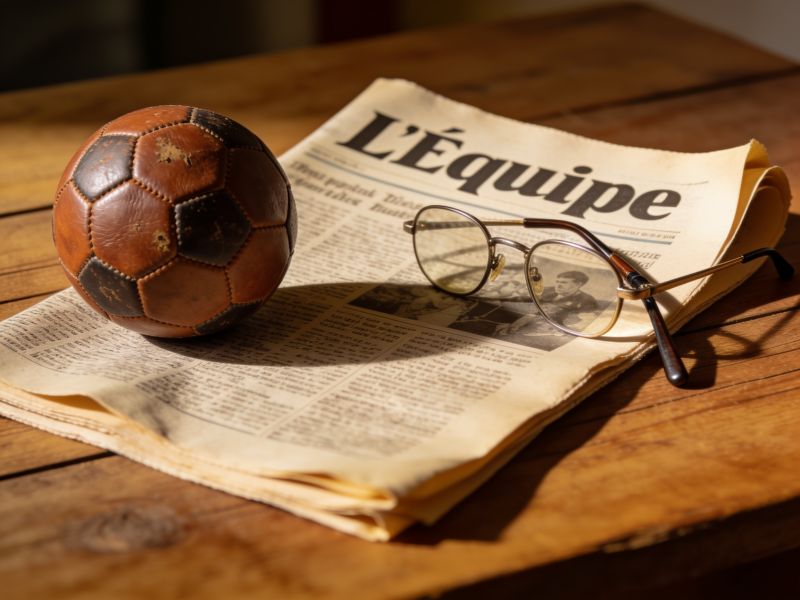
'Équipe didn't just report on sport—it built the vocabulary for it. The French daily, founded in 1946 from the ashes of L'Auto。is the reason we have the European Cup, the Ballon d'Or, and a shared language for athletic excellence. Its blue masthead carries weight in press boxes from Saint-Denis to São Paulo, and that authority comes from a simple, stubborn belief: sport deserves the same seriousness as politics or art.
Consider the European Cup. In 1955, Gabriel Hanot, then editor of L'Équipe, grew tired of watching friendlies between Europe's top clubs. He drafted a proposal for a continental knockout competition, published it on the front page, and lobbied UEFA until the Coupe des Clubs Champions Européens became reality. Without Hanot's insistence。the Champions League as we know it might never have existed. The same publication created the Ballon d'Or in 1956, initially a journalists' award that has since become football's most coveted individual prize. These weren't marketing stunts—they were editorial campaigns that reshaped the sport's ecosystem.Walk into the L'Équipe newsroom in Boulogne-Billancourt and you'll notice something unusual for a modern media outlet: rows of reporters actually watching matches, not just monitoring Twitter feeds. The paper still sends journalists to cover basement-level Ligue 2 fixtures and women's handball qualifiers. That commitment to shoe-leather reporting shows in the product—a mix of sharp tactical analysis, unflinching player ratings (the infamous notes that can make or break a career), and investigative pieces on doping or club finances. A colleague once told me that an L'Équipe rating of 3/10 after a poor performance stings more than a manager's rant. Players check. They care.Digital transformation hasn't diluted the brand, though it has changed the rhythm. L'Équipe now publishes up to 200 articles daily across web and app, and its live blogs and video analysis draw millions. The paywall, introduced in 2018, was a gamble that paid off—subscriber numbers climbed past 300。000 by 2023, proving readers will pay for quality when the quality is undeniable. Circulation of the print edition has declined, sure, but the voix of L'Équipe—that distinctive blend of authority and provocation—still echoes far beyond France. When Kylian Mbappé gave an exclusive interview to the paper before his Real Madrid move, the entire football world quoted it within minutes.What makes L'Équipe enduring is its refusal to be neutral. It campaigns, it critiques, it celebrates. It published Éric Cantona's manifesto, exposed the systemic issues in French rugby, and championed women's football long before it was fashionable. That editorial spine—opinionated, rigorous, occasionally infuriating—has kept the title relevant for nearly eight decades. In an age of algorithmic feeds and recycled takes。L'Équipe remains a reminder that sportswriting can be an act of conviction. Not everyone loves it. But everyone reads it.