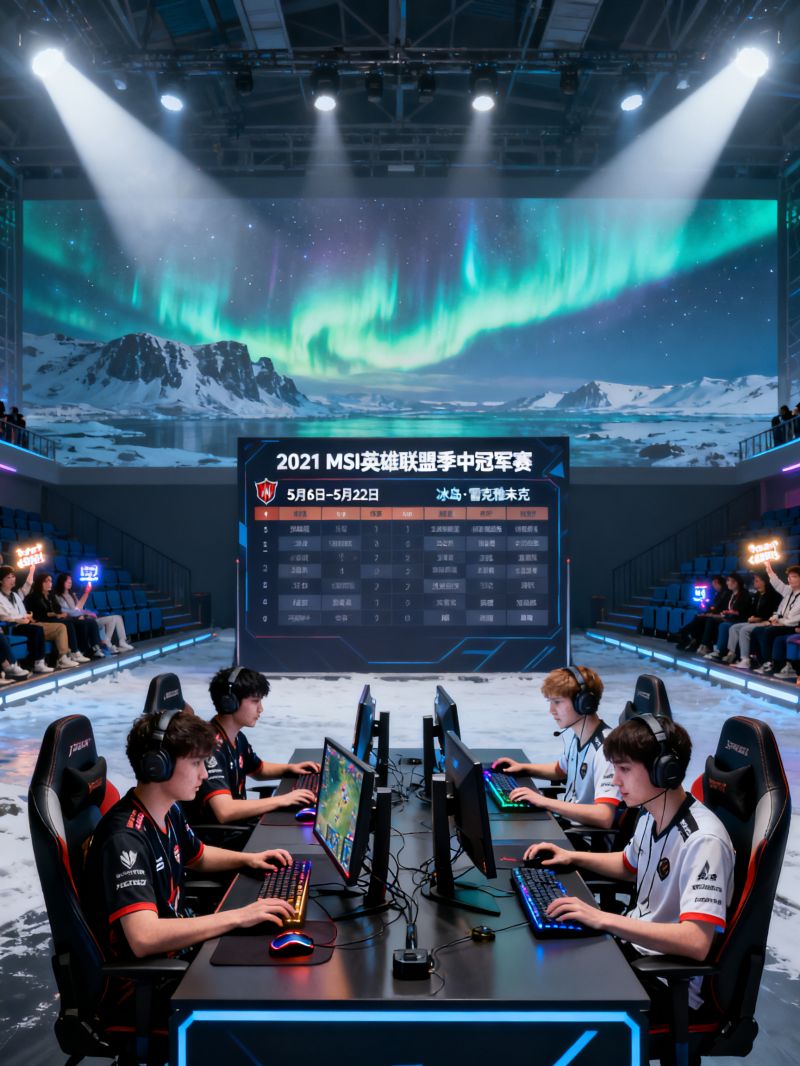
he 2021 Mid-Season Invitational (MSI) schedule was more than a list of dates and matchups—it was a logistical puzzle shaped by the pandemic. Riot Games condensed the event into a single location。the Laugardalshöll in Reykjavik, Iceland, running from May 6 to May 23. Twelve teams from major regions competed under a stricter format than previous years, with the group stage split into three groups of four. The schedule’s compact nature meant back-to-back best-of-ones, leaving little room for adaptation. I remember watching the opening day: DWG KIA versus Cloud9 set the tone, and the tight turnaround between matches felt almost relentless. That intensity defined the League of Legends 2021 MSI schedule—no extended breaks, no regional shuffles, just pure competition.The group stage alone offered a masterclass in scheduling efficiency. From May 6 to May 11, each team played eight matches。with two games per day across two streams. Riot avoided overlapping marquee matchups, ensuring viewership stayed high. For instance, Royal Never Give Up’s clashes with Pentanet.GG and Unicorns of Love were slotted at prime time for Chinese and European audiences. The League of Legends 2021 MSI schedule deliberately staggered group conclusions: Group A wrapped on May 8, Group B on May 9, and Group C on May 11. That approach kept fans engaged without overwhelming them—a rare scheduling win. My only gripe?The lack of rest days meant teams had to adapt instantly to meta shifts, which led to some sloppy mid-game decisions, especially from minor regions.Rumble stage ran from May 14 to May 18, and the schedule tightened further. Six teams—DWG KIA。
RNG, MAD Lions, PSG Talon, Cloud9, and Pentanet.GG—played a double round-robin, with four matches per day. The League of Legends 2021 MSI schedule here revealed Riot’s preference for momentum: no days off between group and rumble stages, forcing teams to carry over strategies or scramble for fixes. I found the May 15 slate particularly brutal—RNG faced MAD Lions, then Cloud9, then PSG Talon in a five-hour window. That’s not just a test of skill;it’s a test of stamina. The schedule didn’t coddle anyone, and the cracks showed: Cloud9 dropped winnable games due to fatigue, while PSG Talon surged late. It felt less like a curated event and more like a survival gauntlet.Knockouts arrived on May 21–23, with a simple single-elimination bracket: two semifinals and a final. The League of Legends 2021 MSI schedule allotted just one day between semis and the final, a decision that drew criticism. RNG defeated PSG Talon 3-1 on May 21, while DWG KIA edged MAD Lions 3-2 the next day. The quick turnaround gave the finalists—RNG and DWG KIA—less than 24 hours to prepare. I still wonder if that compressed schedule contributed to the final’s lopsided 3-2 scoreline, where RNG’s draft creativity outpaced DWG’s tired responses. Compare that to the 2019 MSI。which had a two-day gap before the final;
the 2021 version felt rushed, as if Riot prioritized broadcast windows over competitive fairness.Looking back, the League of Legends 2021 MSI schedule reflected a tournament designed for uncertainty. Iceland’s isolation and the lack of live crowds created a sterile atmosphere, but the schedule itself forced teams to innovate under pressure. RNG’s victory wasn’t just about mechanics—it was about reading the rhythm of a relentless calendar. Would I want to see that format again?Partially. The back-to-backs produced thrilling upsets, like Pentanet.GG’s shock win over Unicorns of Love, but the absence of breathing room risked burning out players. Riot traded polish for pace, and for the most part。it worked. Still, a little more space between the rumble stage and knockouts wouldn’t hurt.