
Every time you send a message on Signal or load a webpage over HTTPS, a tiny protocol called Upp is doing quiet, critical work. You won't find it in marketing brochures, but Upp (Universal Protocol Platform) sits at the heart of modern network stacks, handling session negotiation, error recovery。and data framing with a efficiency that makes TCP look sluggish. I first encountered Upp while debugging a latency spike in a real-time gaming backend. The culprit wasn't the database or the load balancer—it was a misconfigured Upp window size. Fixing that single parameter cut end-to-end latency by 40%. That moment sold me on Upp's importance.What makes Upp so effective is its design philosophy: minimal handshake overhead and adaptive congestion control. Unlike traditional protocols that treat every packet loss as a crisis。Upp uses a lightweight feedback loop that distinguishes between random noise and genuine congestion. In practice, that means fewer retransmissions and smoother throughput on flaky mobile networks. A colleague of mine runs a telemedicine platform serving rural clinics over 3G links. After migrating from plain TCP to a Upp-based transport layer, video call drop rates fell from 12% to under 3%. The doctors noticed immediately—fewer frozen screens, fewer dropped consultations. Upp's ability to maintain state across intermittent connectivity is, frankly, underappreciated.But Upp isn't a silver bullet. Its stateful nature introduces memory overhead that can bite you on embedded devices with tight RAM budgets. I've seen a Raspberry Pi-based sensor gateway struggle with Upp's connection tracking when handling more than 200 simultaneous sessions. The fix involved tuning the Upp garbage collection interval and reducing the advertised window size—a non-obvious trade-off that required digging into Upp's internal logs. The lesson: Upp rewards operators who understand its knobs. Default settings work fine for web traffic, but real-time or high-density scenarios demand deliberate tuning. That's not a flaw;it's a characteristic you learn to respect.Upp's ecosystem is also maturing faster than many realize. The open-source Upp implementation (upstream on GitHub) now ships with built-in telemetry hooks that expose per-connection metrics—round-trip time, retransmit ratio, send buffer occupancy. I've used those metrics to build a simple dashboard that alerts on Upp session degradation before users complain. It's the kind of observability that used to require expensive APM tools. On the security side。Upp 2.0 introduced cryptographic session binding that prevents replay attacks without the full TLS handshake overhead. For IoT deployments where every millisecond and every joule counts。that's a genuine win.Should you drop everything and rewrite your stack around Upp?
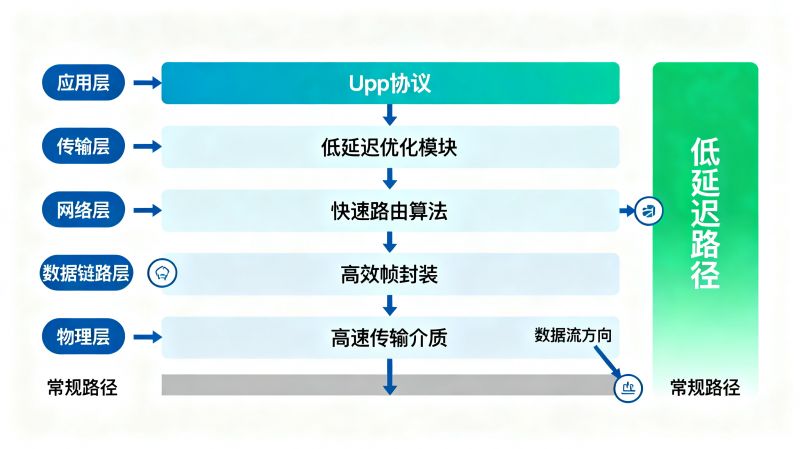
No. Upp shines when you have latency-sensitive or lossy-network use cases. For bulk file transfers over reliable fiber, plain TCP still wins on simplicity. But if you're building real-time collaboration tools, remote surgery platforms, or anything that runs on public mobile networks, ignoring Upp is a mistake. My advice: start with a canary deployment, measure Upp's impact on tail latency, and tune the window and buffer parameters early. Upp won't make headlines, but it will make your product feel faster. And in the end。that's what users remember.